The Eos Experiments: Interspecies Edition
Practical Ways of Coping with Pet Loss

I’ve split this piece into two parts so you can breathe between them. Start with The Science of Pet Loss exploring why it hurts the way it does. Then come back here for part two: how to say goodbye to your best friend without completely unraveling your nervous system.
Still too long? Here’s an infographic:

How to Say Goodbye
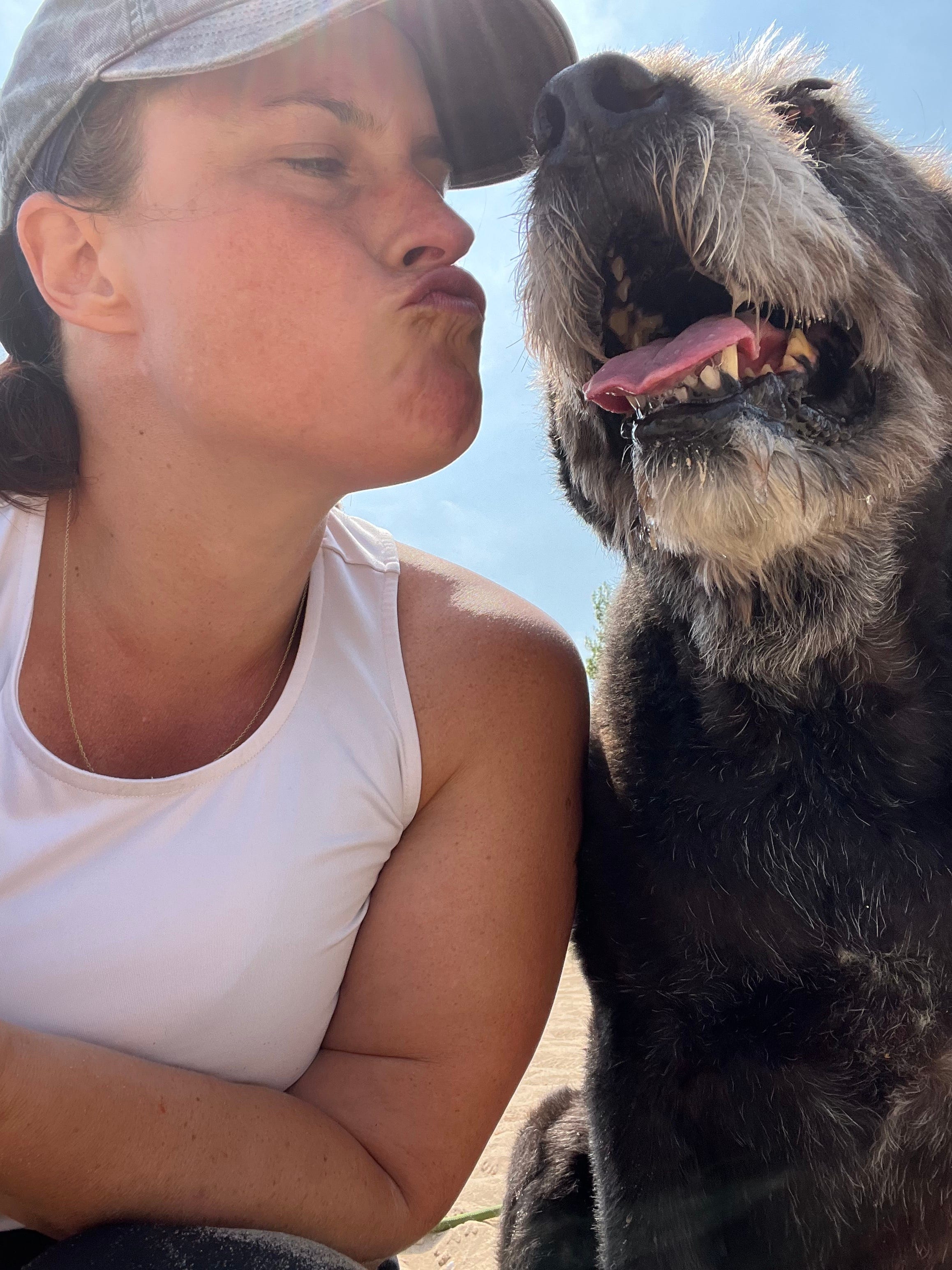
I am deeply attached to my ancient terrier, Olga. I know all creatures must die, and she will too. Over the years I’ve worked to prepare myself for this, and while I don’t yet know if it will be successful, I am sharing my neuropsychology experiment here in hopes it may preemptively help other people who love their own pets with the same fervor.
Develop a Cope Ahead Plan
The first thing I did was make a list of what I imagined would be the most difficult parts of Olga’s end of life for me. My list wasn’t long, and it looked something like this:
Dying in a vet’s office (I want her to die at home)
Not knowing how much I love her
Being afraid at the end
I then developed a “cope ahead” plan to make the end as easy for both Olga and myself.
I opened a small savings account so I can have her euthanized at home instead of at the vet’s office. I know it will be difficult either way, but I want her surrounded by comfortable smells and people, and it comforts me to know she will be at home.
To combat the idea of her being afraid at the end, I currently spend intentional oxytocin time with her. And, as odd as this may sound, when she curls against me at night, I gather all the love I have in my body and picture it going to her.
I’ve done this for a while, figuring that between mirror neurons, hormones, and coregulation, there’s maybe something in her that can feel what I’m doing. I consider it practice, and when her time comes, that’s the feeling I want her to have as she leaves this world. I want her last moments to be regulated and full of love.
It sounds woo-woo, but in researching this article I found my love exercise is supported by science. Evidence from palliative care studies in both humans and animals suggests that loving touch and attuned presence can reduce pain, anxiety, and restlessness near the end of life (Handlin et al., 2011; Feldman, 2012). This not only supports the dying individual but also helps caregivers with grief and post-loss adjustment, often leading to less complicated grief (Sbarra & Hazan, 2008).
You can do the same. Think about the end-of-life care you want your pet to receive. What are the things you want for them? What are the things that will make grieving easier for you? More complicated? Get creative now and develop a plan that will make your pet’s death easier.
After They’re Gone
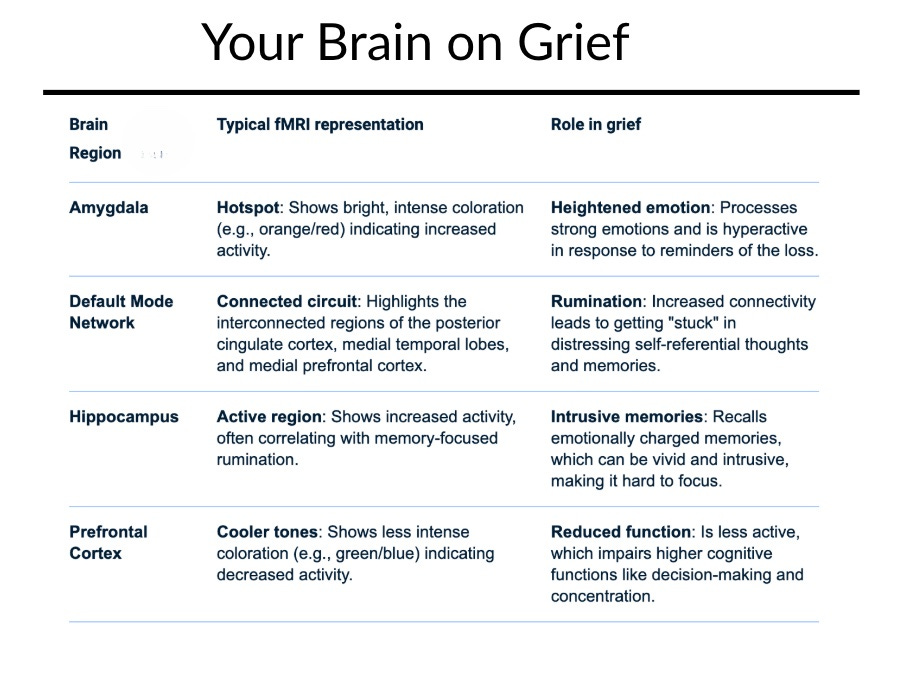
After a death, keeping symbolic acts of connection can help activate limbic reward circuits (the part of our brain that says “this is good,” motivates action, and ties rewards to emotions and memories).
These small symbolic acts might look like sending mental love to the dearly departed, visualizing their presence, and talking to or about the deceased. These acts also activate prefrontal regions, which help pull us out of threat mode and instead create meaning from our pain (Stroebe et al., 2010).
Ritualized practices like these help calm down your limbic system (the system that moderates fear/threat, memory, and hormone regulation). Practicing symbolic acts after a death is also linked to lessened symptoms associated with complicated or traumatic grief (Sbarra & Hazan, 2008; Neimeyer et al., 2014).
Grief Does What It Wants
Once your pet is gone, remember that grief is something you can put on a shelf. You don’t have to feel it consistently for it to mean that you loved your pet. You can feel the grief, then put it on the shelf and feel happy for a little while, then acutely feel the pain again.
Most people experience the sharpest pain for the first 2-6 months, with waves of intense grief continuing for 1-2 years. But grief isn’t linear—you might feel fine for weeks, then sob when you open a Frito bag and it smells like your dog’s paws. This is normal. Your brain is literally rewiring itself to accommodate the absence of a being who was deeply integrated into your daily life and nervous system regulation.
Creating Meaningful Rituals
Because pet grief is disenfranchised grief, finding ways to legitimize the loss becomes important. In my small group of girlfriends, we honor all losses equally whether that loss is parents, grandparents, or dogs. Watching my friends show up equally for both a beloved dog and a loving mother adds a legitimacy to grief that I am grateful for.
If you’re missing that community support, making the grief “real” is something you can do alone. Here are some specific ideas:
Traditional Approaches
Traditional approaches might include having a small funeral or memorial service for your pet, making a shadowbox with your pet’s collar, creating a photo album or scrapbook, or planting a tree or flowers in their honor to watch grow. A client of mine just shared that making her dog her computer background helped her feel better. It doesn’t have to be big to be meaningful.
Personally, I love the idea of permanent jewelry as a permanent reminder of how a pet affected your life. It can also serve as a visual reminder that you are grieving and to be gentle with yourself, similar to the old tradition of wearing black for a year.
Alternative Rituals
If those feel too concrete, go wild instead. Unconventional grief rituals may get criticism from people who think grief should follow Robert’s Rules of Order, but these practices often check the same boxes as “normal” ones.
You might light a candle for your pet each night for a specific period, write them letters, get a stuffed cat made in the image of Fluffy, create art inspired by your pet, talk to them out loud like they’re still listening, or volunteer at animal shelters in their memory.
My best friend still grieves her dog that was hit suddenly by a car. I offered to pay for an Akashic reader for her to serve as a pet medium so she could check in on her dog and make sure all was forgiven. It doesn’t have to be evidence-based to be meaningful.
This is because your brain doesn’t care about official protocols. It cares about meaning, sensory cues, and repetition, which are things rituals deliver abundantly. Even if crystals, tarot cards, or churches aren’t your thing, the structure and symbolism of these practices can help your nervous system integrate the loss.
Debunking Harmful Myths
People try to be helpful, they really do. But sometimes they say garbage things that hurt more. Let’s address them here to get them out of the way, shall we?
“You can just get another dog.” No. Your pet wasn’t a toaster that broke. They were a unique being with whom you shared years of regulation and attachment. Getting a new pet eventually might be wonderful, but it doesn’t erase grief, and it definitely shouldn’t be rushed.
“It was just an animal.” Um, actually, Brad in HR, I read this blog that said your brain doesn’t distinguish between species when it comes to attachment and grief.
Give Brad my card to hold onto—he’s going to have relationship troubles in the future.
“At least they’re not suffering anymore.” While this might be true, it doesn’t actually comfort someone in acute grief. It’s like telling someone who lost a parent, “At least they lived a long life.”
Not all things that are true are helpful.
“Everything happens for a reason.” This one makes me want to throw things. Sometimes terrible things just happen. There’s no cosmic lesson in watching your best friend die.
Things that Actually Help
If someone you care about has lost a pet, good things to say include:
“God. I’m just so sorry. That’s so fucking hard.”
“What do you miss the most about [pet’s name]?”
“I’m bringing dinner this week, which day is good?”
Sometimes saying nothing and just hanging out with them in the sadness works best. Let them do the talking. Therapy school 101... if you don’t know what to say, say nothing.
For practical support, offer specific help like “I’m going to the grocery store. What can I pick up for you?” Put important dates in your calendar like the pet’s birthday or the anniversary of their death. Share favorite memories of their pet. Don’t rush them toward getting a new animal, and understand they might need to talk about their beloved repeatedly.
This last one is important. Their brain is reordering memories—be the person that helps them and not the person that says “Gah, aren’t you over that yet?”
Final Thoughts
The real reason pet death destroys us isn’t complicated. We can dress it up in neuroscience and oxytocin and mirror neurons, but here’s the bottom line: They loved us better than we love each other.
They didn’t care about our politics, our bank accounts, our bad days, or our worse decisions. They didn’t love us because we were worthy—they loved us because we were us. And most of the time, we have no idea how to handle being loved that completely.
So we pour all our messy, complicated need for connection into these creatures who never, not once, make us feel like it’s too much. They become our emotional safe house, the place we practice being fully known without being rejected.
And then they die, and we’re left with the devastating knowledge that the purest love we’ll ever receive came from something that couldn’t even say our name.
It’s okay to grieve that.
Resources for Pet Loss Support
Books:
The Grieving Brain and The Grieving Body by Mary-Frances O’Connor
Animals Make Us Human by Temple Grandin
Goodbye, Friend by Gary Kowalski
The Loss of a Pet by Wallace Sife
Podcasts
“All There Is with Anderson Cooper”
All Dogs Go to Heaven from the podcast “Near Death”
Online Support:
Association for Pet Loss and Bereavement (aplb.org)
Pet Loss Support Page (petloss.com)
Rainbow Bridge Pet Loss Grief Support (rainbowsbridge.com)
Pet Loss Hotlines:
Pet Loss Support Hotline: 1-877-394-2273
ASPCA Pet Loss Hotline: 1-877-474-3310
References
Adrian, J. A., Deliramich, A. N., & Frueh, B. C. (2009). Complicated grief and posttraumatic stress disorder in humans’ response to the death of pets/animals. Bulletin of the Menninger Clinic, 73(3), 176-187.
Beck, A., & Katcher, A. (2003). Between Pets and People: The Importance of Animal Companionship. Purdue University Press.
Buckner, R. L., Andrews‐Hanna, J. R., & Schacter, D. L. (2008). The brain’s default network: Anatomy, function, and relevance to disease. Annals of the New York Academy of Sciences, 1124(1), 1-38.
Carr, L., Iacoboni, M., Dubeau, M. C., Mazziotta, J. C., & Lenzi, G. L. (2003). Neural mechanisms of empathy in humans: A relay from neural systems for imitation to limbic areas. Proceedings of the National Academy of Sciences, 100(9), 5497-5502.
Caspers, S., Zilles, K., Laird, A. R., & Eickhoff, S. B. (2010). Functional characterization and axonal connectivity of the human inferior parietal lobule. NeuroImage, 52(3), 1140–1151.
Dapretto, M., Davies, M. S., Pfeifer, J. H., Scott, A. A., Sigman, M., Bookheimer, S. Y., & Iacoboni, M. (2006). Understanding emotions in others: Mirror neuron dysfunction in children with autism spectrum disorders. Nature Neuroscience, 9(1), 28-30.
Doka, K. J. (1989). Disenfranchised Grief: Recognizing Hidden Sorrow. Lexington Books.
Eisma, M. C., et al. (2022). Grieving as a form of learning: Insights from neuroscience applied to grief and loss. Current Opinion in Psychology, 43, 317-322.
Feldman, R. (2012). Oxytocin and social affiliation in humans. Hormones and Behavior, 61(3), 380-391.
Field, N. P., Orsini, L., Gavish, R., & Packman, W. (2009). Role of attachment in response to pet loss. Death Studies, 33(4), 334-355.
Figley, C. R. (2002). Compassion fatigue: Psychotherapists’ chronic lack of self care. Journal of Clinical Psychology, 58(11), 1433-1441.
Freud, S. (1917). Mourning and melancholia. The Standard Edition of the Complete Psychological Works of Sigmund Freud, 14, 237-258.
Gallese, V., Fadiga, L., Fogassi, L., & Rizzolatti, G. (1996). Action recognition in the premotor cortex. Brain, 119(2), 593-609.
Glocker, M. L., Langleben, D. D., Ruparel, K., Loughead, J. W., Gur, R. C., & Sachser, N. (2009). Baby schema in infant faces induces cuteness perception and motivation for caretaking in adults. Ethology, 115(3), 257-263.
Handlin, L., Hydbring-Sandberg, E., Nilsson, A., Ejdebäck, M., Jansson, A., & Uvnäs-Moberg, K. (2011). Short-term interaction between dogs and their owners: Effects on oxytocin, cortisol, insulin and heart rate—an exploratory study. Anthrozoös, 24(3), 301-315.
Hecht, J., Miklósi, Á., & Gácsi, M. (2012). Behavioral assessment and owner perceptions of behaviors associated with guilt in dogs. Applied Animal Behaviour Science, 139(1-2), 134-142.
Huber, L., Racca, A., Scaf, B., Virányi, Z., & Range, F. (2017). A cross-species perspective on vocal emotion recognition in dogs and humans. Animal Behaviour, 124, 265-273.
Klass, D., Silverman, P. R., & Nickman, S. L. (1996). Continuing Bonds: New Understandings of Grief. Taylor & Francis.
Krusemark, E. A., & Li, W. (2011). Do all threats work the same way? Divergent effects of fear and disgust on sensory perception and attention. Journal of Neuroscience, 31(47), 17189-17196.
Lannen, P., et al. (2020). Amygdala functional connectivity features in grief: A pilot longitudinal study. Biological Psychiatry: Cognitive Neuroscience and Neuroimaging, 5(6), 604-612.
LeDoux, J. E. (2000). Emotion circuits in the brain. Annual Review of Neuroscience, 23(1), 155-184.
Lorenz, K. (1943). Die angeborenen formen möglicher erfahrung. Zeitschrift für Tierpsychologie, 5(2), 235-409.
MacLean, E. L., Gesquiere, L. R., Gee, N., Levy, K., Martin, W. L., & Carter, C. S. (2017). Effects of affiliative human–animal interaction on dog salivary and plasma oxytocin and vasopressin. Frontiers in Psychology, 8, 1606.
McGlone, F., Wessberg, J., & Olausson, H. (2014). Discriminative and affective touch: Sensing and feeling. Neuron, 82(4), 737-755.
Mori, K., Nagao, H., & Yoshihara, Y. (1999). The olfactory bulb: Coding and processing of odor molecule information. Science, 286(5440), 711-715.
Nagasawa, M., Mitsui, S., En, S., Ohtani, N., Ohta, M., Sakuma, Y., & Kikusui, T. (2015). Oxytocin-gaze positive loop and the coevolution of human-dog bonds. Science, 348(6232), 333-336.
Neimeyer, R. A., Klass, D., & Dennis, M. R. (2014). A social constructionist account of grief: Loss and the narration of meaning. Death Studies, 38(6-10), 485-498.
O’Connor, M. F. (2022). The Grieving Brain: The Surprising Science of How We Learn from Love and Loss. HarperOne.
Packman, W., Carmack, B. J., & Ronen, R. (2012). Therapeutic implications of continuing bonds expressions following the death of a pet. OMEGA-Journal of Death and Dying, 64(4), 335-356.
Planchon, L. A., Templer, D. I., Stokes, S., & Keller, J. (2002). Death of a companion cat or dog and human bereavement: Psychosocial variables. Society & Animals, 10(1), 93-105.
Porges, S. W. (2009). The polyvagal theory: New insights into adaptive reactions of the autonomic nervous system. Cleveland Clinic Journal of Medicine, 76(2), S86-S90.
Porges, S. W. (2022). Polyvagal theory: A science of safety. Frontiers in Integrative Neuroscience, 16, 871227.
Rizzolatti, G., & Craighero, L. (2004). The mirror-neuron system. Annual Review of Neuroscience, 27(1), 169-192.
Rizzolatti, G., & Sinigaglia, C. (2010). The functional role of the parieto-frontal mirror circuit: interpretations and misinterpretations. Nature Reviews Neuroscience, 11(4), 264-274.
Sbarra, D. A., & Hazan, C. (2008). Coregulation, dysregulation, self-regulation: An integrative analysis and empirical agenda for understanding adult attachment, separation, distress, and recovery. Personality and Social Psychology Review, 12(2), 141-167.
Stroebe, M., Schut, H., & Boerner, K. (2010). Continuing bonds in adaptation to bereavement: Toward theoretical integration. Clinical Psychology Review, 30(2), 259-268.
Worden, J. W. (1991). Grief Counseling and Grief Therapy: A Handbook for the Mental Health Practitioner. Springer.
Young, L. J., & Wang, Z. (2004). The neurobiology of pair bonding. Nature Neuroscience, 7(10), 1048–1054.
This blog is dedicated to Yogi, Jasper, Socks, Bacon, Aireyn, Daz, Fiona, Ira, Edward Scissorface, Simba, Nala, Ari, and every human who feels *this way* about their pets.
But, without apology, this blog is most especially dedicated to Olga who snoozes supportively through the writing and editing of every post.